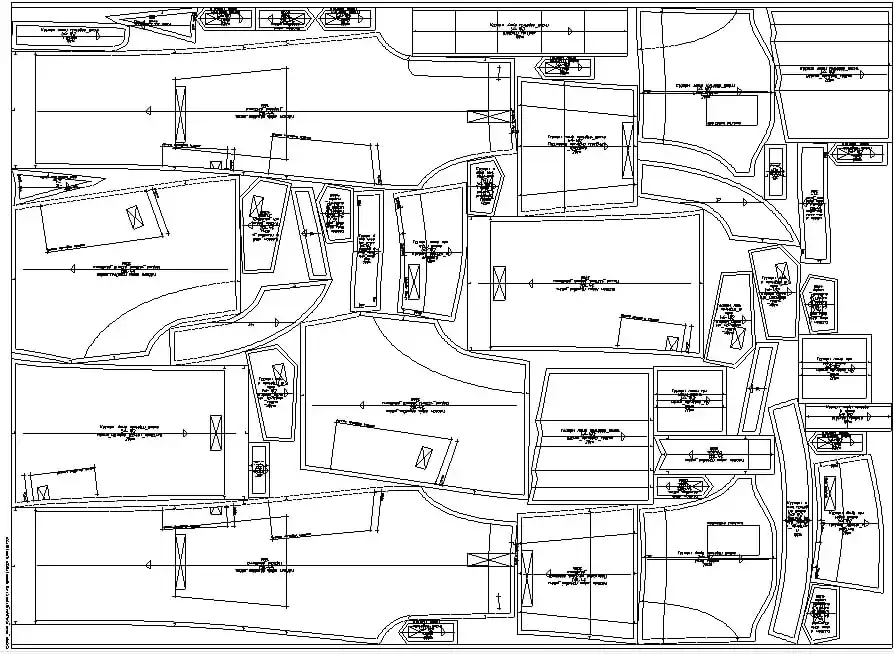
Pattern nesting (marker making) is one of the final stages of working with patterns. Its goal is to arrange the pieces on a given fabric width as efficiently as possible to reduce material consumption and make cutting convenient and fast.
Why pattern nesting is needed
- Fabric savings thanks to optimal piece placement.
- More convenient cutting: a clear layout plan and logical grouping of pieces.
- Accounting for constraints: grainline direction, nap/print direction, symmetry, cut on fold, paired pieces, seam allowances.
- Preparation of materials for printing and production.
How the service works
Modern nesting is done in CAD and does not require manual “rearranging” of pieces. After the final approval of the patterns, I create the marker according to your requirements. Nesting can be performed automatically or semi-automatically, depending on the constraints and the level of control you need.
What I need from you
- Pattern files (PDF/DXF/PLT or another format you use).
- Fabric width (for example, 140 cm, 150 cm).
- Requirements: grainline direction, nap/print direction, cut on fold, pairing, symmetry, and other rules.
- Seam allowances: included / not included (and the required values, if needed).
What you will receive
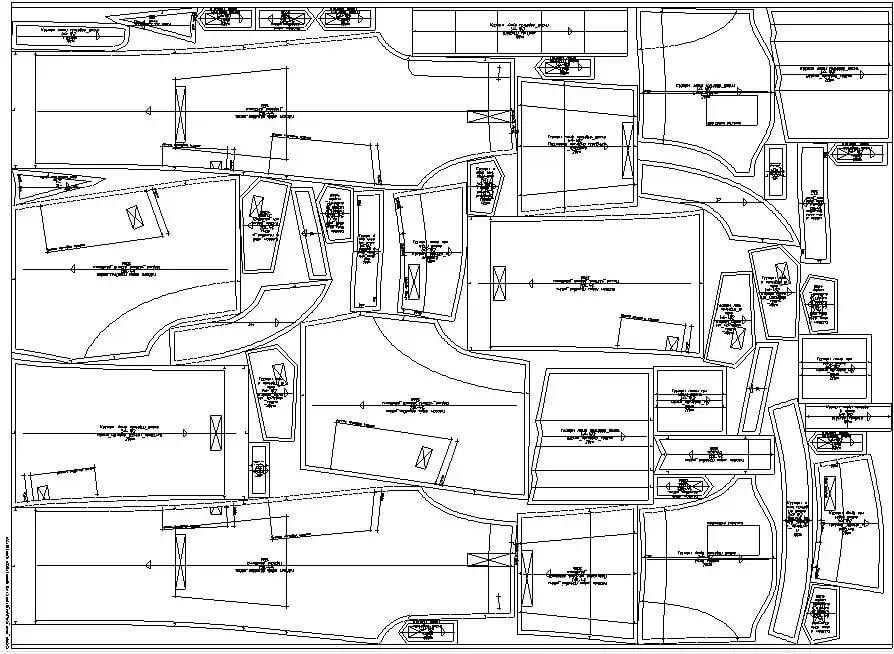
- A marker (layout plan) for the specified fabric width.
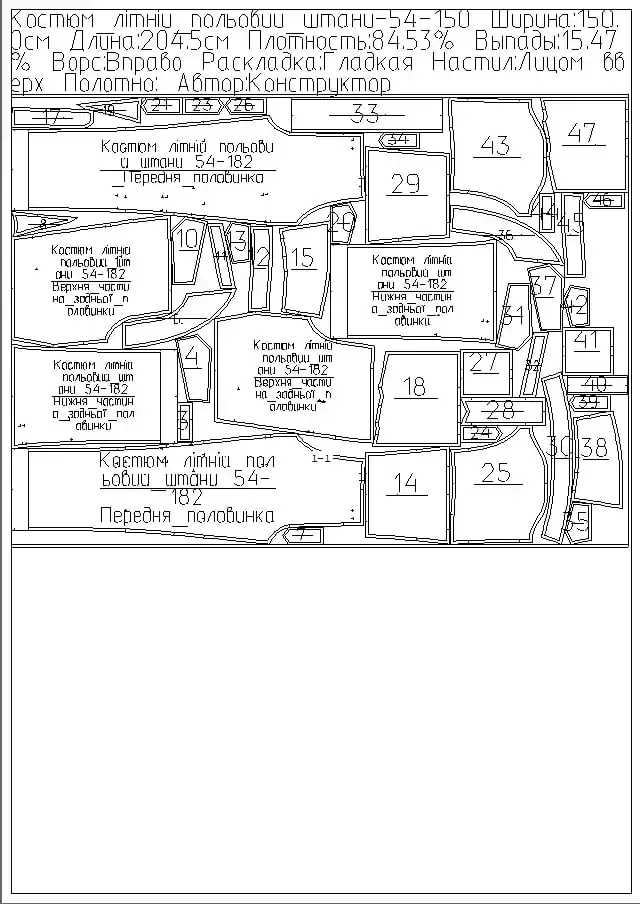
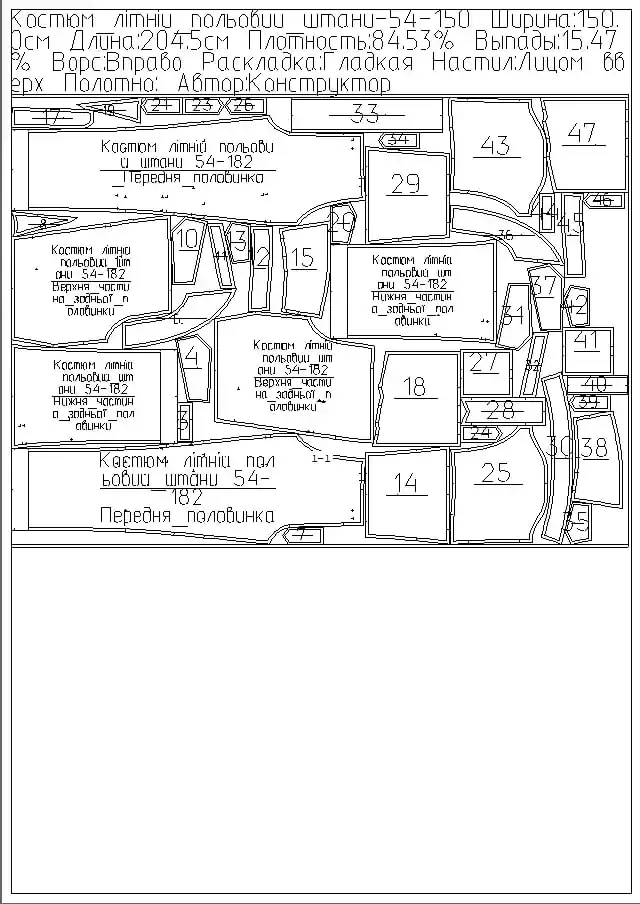
- An A4 miniature (layout plan) for a quick review.
- Files prepared for printing (A4) and/or a plotter (if needed).
See the service cost in the price list.
Examples
A4 miniature (layout plan)
Pattern layout for a specific fabric width
FAQ
What is pattern nesting (marker making)?
Pattern nesting (marker making) is the optimal arrangement of pieces on a given fabric width to reduce material waste and simplify the cutting process. It is used to design technologically and economically efficient layouts, taking into account fabric properties and the specifics of cutting equipment.
What do you need from me to create a marker?
If I developed the patterns, you only need to confirm your equipment parameters (for example, the plotter width) and fabric width. If the patterns were developed in another CAD system, please send the pattern files (DXF), the fabric width, and requirements: grainline direction, nap/print direction, cut on fold, pairing/symmetry rules, and whether seam allowances are included.
Do you make layouts for striped/plaid fabrics or fabrics with nap?
Yes. If you need to follow a nap/print direction or match stripes/plaid, I will apply these rules. It’s important to describe your cutting constraints.
Will the layout be prepared for plotter printing?
Yes. I can prepare an A4 miniature for a quick review as well as files for plotter output—depending on your needs.
Can you create layouts for multiple fabric widths?
Yes. If you use different widths (for example, 140 cm and 150 cm), I can prepare separate markers for each width. Just specify the widths you need.
How long does it take?
Timing depends on the number of pieces, sizes, and constraints (nap/print direction, matching, strict rules). For an accurate estimate, please send your files and requirements.
How is the price calculated?
Price depends on complexity: number of pieces, the set of constraints, number of sizes, and how many layout variants/fabric widths you need. See the price list or send a request for a quote.
Can you create a marker for patterns you didn’t develop?
Yes, as long as you have the rights to use these files (DXF format). I will prepare a marker for your fabric width and cutting requirements.
During the Russian aggression, I actively created patterns for our defenders: winter uniform, summer special suit, men’s thermal underwear, and others. You can instantly purchase all these patterns in my digital pattern store at prices significantly lower than custom development.
All funds from pattern sales go toward development, donations, and creating new patterns.